

Monuments
Ponte di Tiberio
The Ponte di Tiberio is, together with the Arco d'Augusto, the city's most important Roman monument and a symbolic site for the new Rimini, one that has chosen to take a real interest in its history, showcasing and restoring it.
The bridge is made up of 5 arches of Istrian stone, of different sizes, "resting" on the bed of the Marecchia river; the arches are decorated with blind niches and Latin inscriptions.
The Ponte di Tiberio looks out, on one side, onto Parco Marecchia and the Piazza sull'Acqua; on the other (seaward) side, onto the canal and two walkways: one runs along the left-hand side, the other crosses the bridge, leading to the opposite bank and the characteristic Borgo San Giuliano.
Good to know
- The Ponte di Tiberio is also known as the Devil's Bridge. According to legend, Tiberius made a pact with the devil to see the crossing completed. In return, Lucifer asked for the soul of the first person to cross it; but the emperor cheated by sending a dog across, and the devil, to punish him, tried to kick the bridge down.
This is said to explain the hoof marks still visible on the balustrade; it is more likely that these marks were left by the pulley fixings used to lift building materials. - The Ponte di Tiberio was built between 14 and 21 AD; although it bears the name of Tiberius, construction began under the rule of Augustus. Tiberius was in charge by the time the work was completed.
More monuments in Rimini

Anfiteatro romanoBuilt in the 2nd century AD, only a few traces remain today, though it was once a symbol of prestige for Roman Ariminum. In the 17th century it became the...Read more
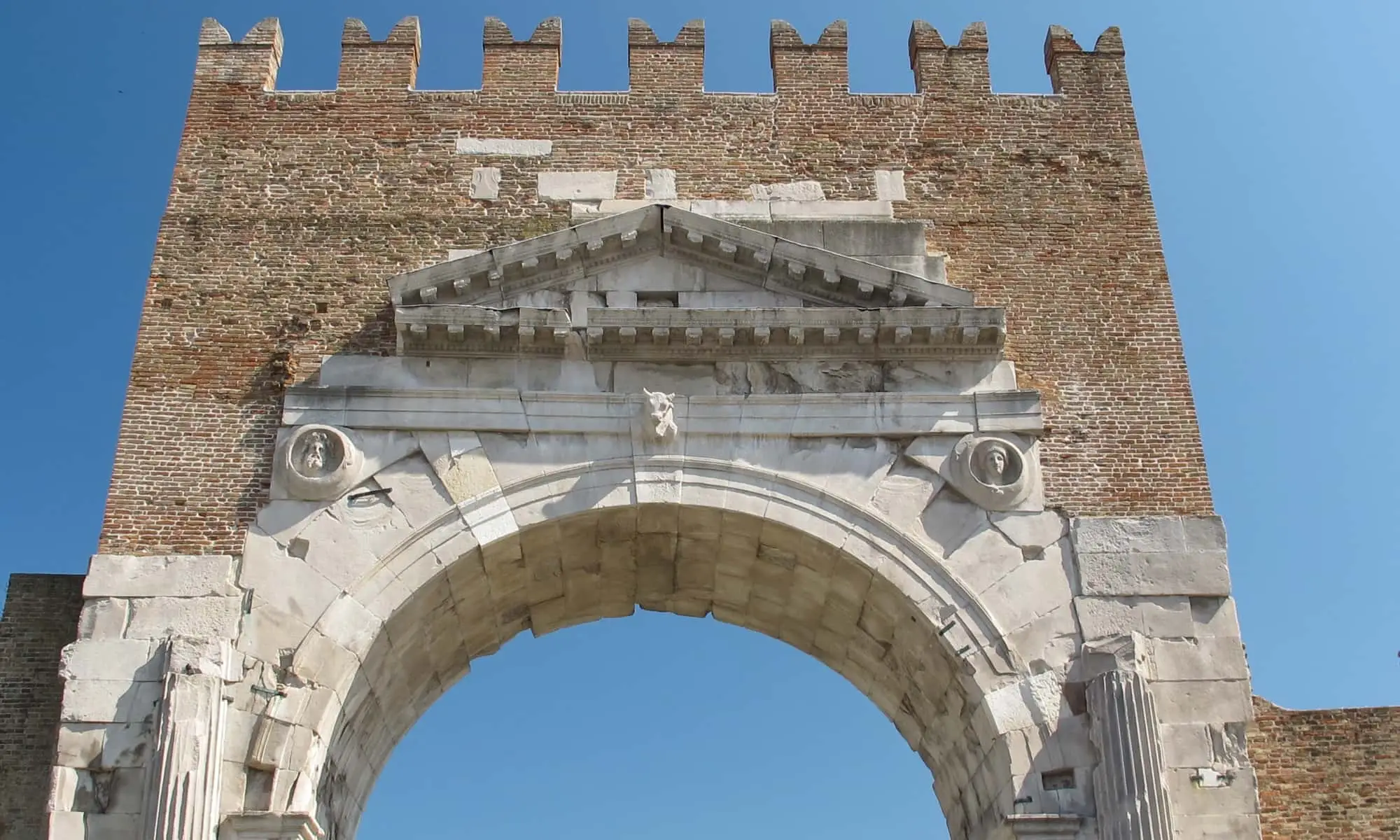
Arco d'AugustoIt survived the 396 bombing raids that struck Rimini during the Second World War. In September 1944 a German officer wanted to demolish it to block the Allied...Read more

Castel SismondoCastel Sismondo, also known as the Rocca Malatestiana, was the home of Sigismondo Pandolfo Malatesta, Lord of Rimini from 1432 to 1468. The castle was designed...Read more

Porta MontanaraIt is the only example in northern Italy of a Sullan-era city gate: the Roman monument that suffered the most damage during the Second World War bombing raids,...Read more

Tempio MalatestianoThe Tempio Malatestiano in Rimini, known to locals simply as "il Duomo", is a building full of contradictions. It began life as an old Franciscan church, over...Read more