First courses of Romagna
There is no word for "pasta" in the Romagnolo dialect: in Romagna you eat "minestra", in broth (mnestra int e' brod) or dry (mnestra sòta).
Either way, fresh pasta is the queen of Romagna cuisine, and first courses take centre stage at the table. The tradition of hand-rolling the sfoglia (pasta sheet) with a rolling pin is still alive in Romagna households, usually on Sundays when there is more time to devote to cooking, and it remains essential in restaurants: this is where tagliatelle comes from, dressed with rich meat ragù; maltagliati, served with pulses; ravioli, filled with ricotta and spinach; and cappelletti (caplèt in Romagnolo), whose filling varies according to the town and area where they are made.
Cappelletti romagnoli
In his book "La scienza in cucina e l'arte di mangiar bene", Pellegrino Artusi describes the recipe for Cappelletti alla Romagna, with a filling of ricotta and raviggiolo cheese and capon breast (or, alternatively, lean pork loin), cooked in capon broth. A typical dish served at the family Christmas lunch.
Depending on the area of Romagna, there are various versions of the filling, called compenso in Romagnolo: in the Rimini area, cappelletti are strictly meat-filled; in the Cesena area you find them with cheese, or with a mix of meat and cheese, where the cheese is usually soft, such as ricotta or raviggiolo, with a little grana and nutmeg, though versions with robiola or, as a speciality, with Formaggio di Fossa are also found.
Cappelletti di magro alla romagnola
This version has a meat-free filling made instead with a mix of cheeses, which, together with its shape, sets it apart from the Emilian tortellino.
Ingredients [for 6 people]
- 600 g flour
- 8/10 eggs (6/8 for the pasta, 2 for the filling)
- 500 g ricotta
- 500 g cheese (for example raviggiolo)
- 100 g parmesan or grana
- salt
- nutmeg
Method
First, you need to make the pasta sheet with flour and eggs. The role of the eggs is very important: the general rule is one to one (1 person, 100 g of flour, 1 egg), but for a richer pasta, or if the eggs are small, you can use a few more. Flour and eggs should be kneaded vigorously until you get a smooth dough. The sheet can be rolled out by hand or with the help of a pasta machine, which in Romagna is sometimes known as the "nonna papera" (granny duck).
The result should be pasta that is thin, but not too thin: a slightly rough sheet, in fact, allows the sauce to be absorbed better (this also applies to tagliatelle and ravioli); if using the machine, take care not to pass the dough through the rollers too many times. The strips of pasta are then cut into squares of about 5 cm per side
Making the filling is not very demanding: just mix the cheeses in a bowl until you get a smooth, velvety mixture.
Now you need to shape the cappelletto: fill with the mixture and fold into a triangle, pressing well along the edges to stop the cappelletto opening during cooking; the triangle is then wrapped around a finger and the two ends overlapped.
The cappelletti are cooked in meat broth and served 10 minutes after cooking is finished: resting the pasta is essential to bring out all the flavours of the ingredients.
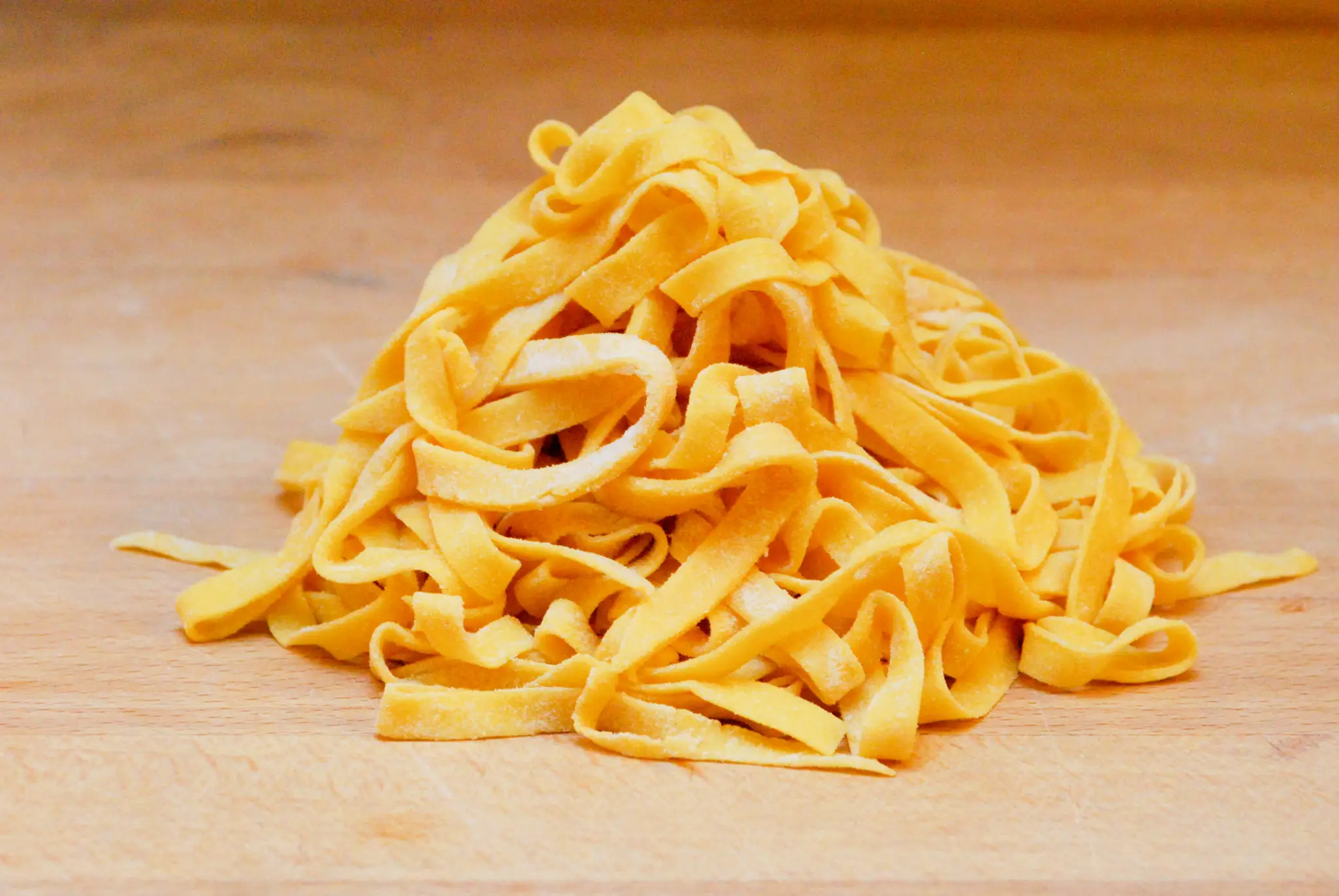
Tagliatelle alla Romagnola
This is the most famous first course on the tables of Romagna. If you want to dress it the traditional way, use classic Romagna ragù, but if you want to try a truly refined dish, and if the season is right, dress it with melted butter and shavings of white truffle: you will be won over by this delicacy.
Ingredients
- 600 g flour (if you like it firm and rough, use a mix of durum wheat flour and a handful of maize flour)
- 6 eggs
Method
Knead the ingredients and roll out a good sheet of pasta, which should be floured and rolled up once it has dried slightly; then cut the rolls into strips about 3 mm wide. Boil the pasta in salted water and dress as you like.
Maltagliati with beans
Maltagliati with beans is a simple, rustic dish, ideal for the colder months. It is made with irregularly shaped egg pasta, traditionally made from the scraps of pasta sheet left over from other preparations, such as tagliatelle.
Ingredients [for 6 people]
- 300 g flour
- 3 eggs
- 1 kg fresh borlotti beans (or 300 g dried borlotti beans, soaked overnight)
- ½ onion
- 2 cloves of garlic
- ½ glass of extra virgin olive oil
- 2 litres of salted water
Method
To make the pasta, roll out the sheet made by kneading flour and eggs. Leave to rest at room temperature for about 30 minutes. Roll out the sheet by hand or with the machine and cut into thin strips, then cut irregularly to get pasta diamonds of various sizes. Leave to dry on the board, covered with a cloth.
To make the soup, put oil, onion and garlic in a very large pan, fry gently and add the beans and water. Add water as it cooks, remembering that the beans should not be too soupy.
Add the maltagliati to the pan with the beans and cook for a few minutes. Adjust the salt and pepper, add a drizzle of raw olive oil and serve very hot, perhaps in terracotta bowls.
Minestra imbottita
Also known as minestra lorda or spoja lorda, this typical Romagna soup is made with fresh filled pasta cooked in meat broth. Its name comes from the fact that it was a humble dish, in which the filling barely "dirtied" the pasta.
Ingredients [for 6 people]
- 300 g flour
- 4 eggs (3 for the pasta, 1 for the filling
- 200 g mixed ricotta (cow's/sheep's milk)
- 100 g parmesan
- meat broth
Method
For the pasta sheet, proceed as for tagliatelle, kneading flour and eggs until you get a smooth dough. Roll the pasta into a thin sheet and cut with a small wheel into little squares 2 cm per side. For the filling simply mix the cheeses with 1 egg.
Place the filling in the centre of each little square and fold to close into a half-moon shape, taking great care that the edges are well sealed.
Cook the pasta in meat broth and serve very hot with a sprinkling of parmesan.
Passatelli
Passatelli, too, are an ancient Romagna tradition. They are almost always eaten in meat broth, although there are also "dry" versions dressed with summer produce (cherry tomatoes, mozzarella and basil), winter produce (mushrooms and truffles), or fish (prawns, mantis shrimp, clams).
Ingredients [for 6 people]
- 150 g plain breadcrumbs
- 200 g parmesan
- 4 eggs
- salt
- lemon zest, to taste
- nutmeg
- meat broth
Method
Making passatelli is very simple. In a bowl, mix the ingredients together well. Divide the mixture into small balls, leave to rest and cover with a cloth. To make the passatelli, you can use a special tool (found only in grandmothers' kitchens), called "il ferro" (the iron), or a potato ricer. In this case, the ball of dough is put into the tool and pressed, dropping the passatelli directly into the boiling broth; they are ready when they float to the surface.
For the dry versions, boil them in salted water and then dress very carefully, as they break apart easily: remember that they are made of bread and parmesan.
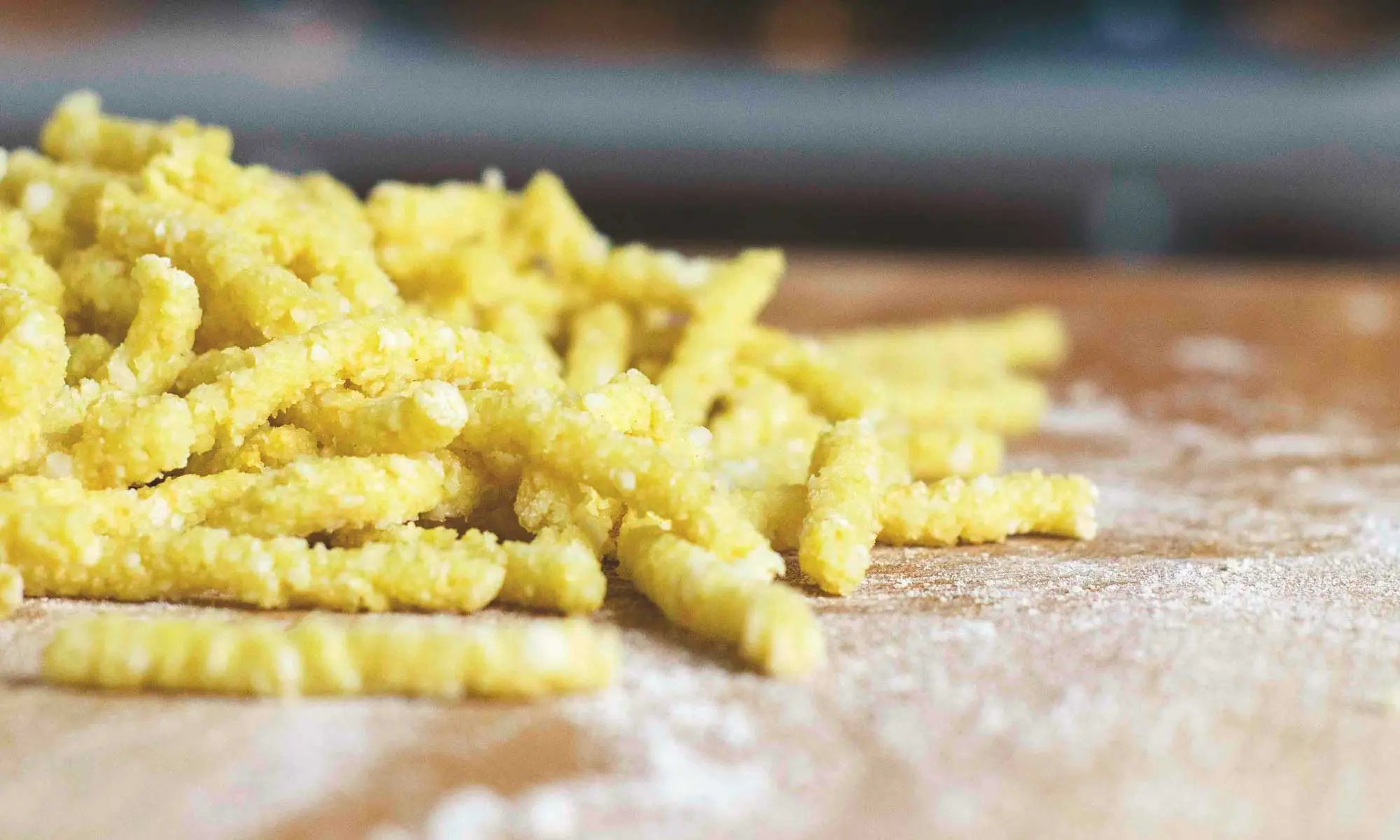
Strozzapreti
Strozzapreti are a type of pasta typical of the Rimini area. Very ancient in origin, they were traditionally found in the poorest households, where they were made with just water and flour, a pinch of salt and an egg if there was one. In fact, the origin of their name suggests that this was a type of pasta made without eggs, because the eggs were taken away from the women by the priests... who cursed the dough as they made it.
The origin of the name is not certain, but they were undoubtedly a hearty, tasty meal, appreciated above all for the gluttony of the clergy, who did not always enjoy the sympathy of ordinary people.
It is a shape of pasta perfect for holding rich sauces of any kind: in Romagna they are eaten with classic ragù, wild boar ragù, mushroom and sausage ragù, or a sauce of mantis shrimp or mixed seafood.
Ingredients [for 4 people]
400 g flour
200 ml warm water
Method
Pile the flour into a well and add the water, kneading until you get a soft, smooth dough; wrap it in cling film and leave to rest for 10 minutes.
After resting, roll out a sheet about 2 mm thick, cut strips about 1.5 cm wide and roll the pasta between your palms; break the pasta into lengths of 8-10 cm. Leave the shaped pasta to rest on floured trays, boil in salted water and serve with the sauce of your choice.
Orecchioni, or urciòn in Romagnolo
Orecchioni are a typical filled pasta shape, in the form of a half-moon. There are various versions, with ricotta and spinach, with cheeses such as stracchino and casatella, with pumpkin or stridoli (wild hop shoots). They are eaten with ragù, or simply dressed with melted butter flavoured with sage.
Ingredients [for 6 people]
- 600 g flour
- 6 eggs
For the filling: - 600 g ricotta
- 2 eggs
- 150 g parmesan
- parsley
- salt
- nutmeg
Method
Make the pasta sheet in the usual way. For the filling, mix the ingredients together well. Using a glass about 7-8 cm in diameter, cut out a number of discs and place a teaspoon of filling in the centre of each one. Fold the disc into a half-moon shape, pressing the edges well together, using the tines of a fork if needed.
Boil the orecchioni in plenty of salted water and dress as you like.
Tardura
An ancient Romagna soup made in broth, this is a typical Easter Sunday dish. A very simple, quick recipe that can be seen as a variant of the more famous passatelli. Tardura, in the Romagnolo dialect, means "drawn", as it is a preparation that is drizzled in rather than kneaded.
Ingredients
- 6 eggs
- 100 g parmesan
- 150 g breadcrumbs
- salt and pepper
- nutmeg
- meat broth
Method
In a bowl, beat the eggs and add all the other ingredients until you get a mixed, fairly loose batter.
Meanwhile, bring the broth to the boil; once boiling, lower the heat, pour in the batter, raise the heat again and stir vigorously and continuously: the soup is ready when the mixture begins to form small clumps. Serve very hot with plenty of parmesan.
Bassotti romagnoli
A humble, traditional country dish, from a time when two eggs for the pasta were never in short supply; today it is rarely served in restaurants, although it is still a regular on grandmothers' tables, especially in the Forlì area. It is a kind of tagliolini in broth, but served dry.
Ingredients
- 400 g flour
- 4 eggs
- 400 ml meat broth (chicken is best)
- 80 g butter
- 100 g parmesan
- breadcrumbs, as needed
- pepper or nutmeg, as needed
Method
Make very thin tagliolini with egg pasta sheet, or alternatively use dried tagliolini (in this case the pasta should be blanched for 1 or 2 minutes). Butter a shallow pan (or an ovenproof dish) and dust it with breadcrumbs.
Arrange an even layer of tagliolini, a few knobs of butter and grated parmesan, then more tagliolini, until the dish is half full. Add the broth to cover and bake at 180°C for 20 minutes.
After this time, top with a thin omelette made with eggs, grana, nutmeg, salt and pepper. Cover the surface and return to the oven to gratinate; if needed, moisten with a couple of spoonfuls of boiling broth. Serve at the table with plenty of grated parmesan.
More places in Discover Romagna